

 400-110-5656
Import and Export Trade Data
In September 2024, Chinas total import and export value was 525.71 billion US dollars, a decrease of 0.1% compared to August this year and an increase of 1.5% compared to September last year; In terms of exports, the export amount in September was 303.71 billion US dollars, a decrease of 1.6% compared to August this year and a year-on-year increase of 2.4% compared to September last year; In terms of imports, the import amount in September was 222 billion US dollars, an increase of 2.0% compared to August this year and 0.3% compared to September last year. The trade surplus of goods was 81.71 billion US dollars, with a cumulative total of 689.5 billion US dollars from January to September.
In September 2024, Chinas imports of mechanical and electrical products amounted to 6429.5 billion yuan (with exports reaching 13148.0 billion yuan). From January to September, the cumulative imports of mechanical and electrical products amounted to 51335.2 billion yuan (with exports reaching 110312.4 billion yuan), representing a year-on-year increase of 9.6% (with exports growing by 8.0%) compared to the previous year; Among them, in September, the import of integrated circuits was 49.73 billion (export 27.68 billion), with an import amount of 256.59 billion yuan (export 10.232 billion yuan). From January to September, the import was 1999.13 billion yuan (export 838.09 billion yuan), an increase of 13.5% (export increase of 22%) compared to the same period last year. In September, the import of medical devices was 8.34 billion yuan (export 11.98 billion yuan), and the import from January to September was 67.5 billion yuan (export 1010.9 billion yuan), a decrease of 7.5% (export growth 6.2%) compared to the same period last year.
1. Announcement of the General Administration of Customs No. 116 of 2024 (Announcement on the Release of the 2024 Commodity Classification Decision (II))
http://www.customs.gov.cn/customs/302249/2480148/6101085/index.html
Issuance Date: September 12, 2024
Effective Date: September 12, 2024
In order to facilitate the correct declaration of commodity classification by consignees and their agents for import and export goods, and ensure the uniformity of customs commodity classification, in accordance with the relevant provisions of the "Regulations on the Administration of Commodity Classification of Import and Export Goods of the Peoples Republic of China Customs" (General Administration of Customs Order No. 252), the General Administration of Customs has formulated relevant commodity classification decisions (see Annex 1). Among them, the classification decision for "dental zirconia blocks" in Announcement No. 108 of the General Administration of Customs in 2020 (No. W2020-56, W2020-57, subheading 3824.99) has been revised, limiting the scope of the product to "not subjected to high temperature firing". The revised product classification decision numbers are Z2024-0012 and Z2024-0013, with tariff code 3824.9999.
At the same time, based on Chinas import and export commodities and international trade reality, the General Administration of Customs has transformed some of the commodity classification opinions published by the World Customs Organization Coordination System Committee in 2023 into commodity classification decisions and made them public.
2. Announcement of the General Administration of Customs No. 137 of 2024 (Announcement on Relevant Matters Concerning the Pilot of Export Goods Railway Public Multimodal Transport Business Model)
http://www.customs.gov.cn/customs/302249/2480148/6119363/index.html
Issuance Date: September 27, 2024
Effective Date: October 15, 2024
In order to support the high-quality development of multimodal transport, adapt to the adjustment and optimization of modern logistics transportation structure, and improve the convenience level of international multimodal transport goods clearance, in accordance with the Customs Law of the Peoples Republic of China and the Measures for the Supervision of Transit Goods by the Customs of the Peoples Republic of China (issued by the General Administration of Customs Order No. 89, amended by the General Administration of Customs Order No. 240, hereinafter referred to as the "Measures for the Supervision of Transit Goods"), the General Administration of Customs has decided to launch a pilot project for the export goods railway public multimodal transport business model. The relevant matters are hereby announced as follows:
1、 Enterprises may carry out the export cargo rail public multimodal transport business as described in this announcement according to their own needs, and the relevant business model pilot should meet the following requirements:
(1)The transported goods should be containerized cargo.
(2)The domestic transportation mode is limited to railway transportation or a combination of railway and road transportation.
(3)The mode of outbound transportation should be road transportation.
2、 The scope of transporting goods should comply with the requirements of the "Measures for the Supervision of Transit Goods" and relevant announcements.
3、 The containers carrying goods shall comply with the relevant requirements of the "Measures for the Supervision of Containers and Containerized Freight Cars Used for Loading Customs Supervised Goods by the Customs of the Peoples Republic of China" (issued by the General Administration of Customs Order No. 110, revised according to the General Administration of Customs Order No. 198, No. 240, and No. 262).
Domestic road transport vehicles carrying goods shall comply with the relevant requirements of the "Management Measures of the Customs of the Peoples Republic of China for Transport Enterprises and Their Vehicles Carrying Goods under Customs Supervision on Domestic Road Transport" (issued by the General Administration of Customs Order No. 88, revised according to the General Administration of Customs Order No. 121, No. 227, No. 235, No. 240, and No. 262).
4、 Multimodal transport operators (hereinafter referred to as transport operators) and customs supervised workplace operating enterprises (hereinafter referred to as workplace operating enterprises) that adopt the above-mentioned railway public multimodal transport mode submit multimodal transport electronic data to customs through the international trade "single window".
5、 Homework process:
(1) The intermodal transport operator shall handle the application procedures for multimodal transport business data transmission with the customs by presenting the "Application Form for Multimodal Transport Business Data Transmission of Export Goods". Before handling the customs export declaration procedures for the goods, the intermodal transport operator shall submit a multimodal transport application form to the customs.
(2) Place operating enterprises should apply for multimodal transport business data transmission to the customs with the "Application Form for Multimodal Transport Business Data Transmission of Export Goods". When the goods arrive at the customs supervision operation site at the place of departure, the operating enterprise of the site transmits the arrival information to the customs.
(3) After receiving the release information from the multimodal transport application form, the operating enterprise can handle the loading and unloading procedures and transmit the departure information to the customs.
(4) After the goods arrive at the place of replacement, the operating enterprise of the premises shall transmit the arrival information to the customs before carrying out the replacement work
(5) After the replacement of goods is completed, the operating enterprise of the premises should transmit the departure information to the customs.
(6) After the goods arrive at the place of exit, the operating enterprise should transmit the arrival information to the customs.
(7) For outbound transportation vehicles and other outbound transportation logistics information that need to be supplemented, the intermodal transport operator shall supplement and transmit the outbound logistics information before the goods leave the country.
The "Application Form for Data Transmission of Export Goods Multimodal Transport Business", "Data Items of Export Goods Multimodal Transport Application Form", "Data Items of Arrival Information", "Data Items of Departure Information", "Supplementary Data Items of Outbound Logistics Information", "Data Items of Changes in Domestic Logistics Information", and "Specification for Filling in Export Goods Multimodal Transport Application Form and Related Electronic Data" are detailed in the attachment.
6、 Information change and deletion:
(1) If the application information for data transmission is changed, the intermodal transport operator or venue operating enterprise shall handle the change procedures with the customs at the place where the data transmission application is accepted. If there are unfinished multimodal transport services, the data transmission application shall not be cancelled.
(2) If the multimodal transport application form or domestic logistics information is changed or deleted, the intermodal transport operator may apply to the customs at the place of departure.
(3) If there are errors in the arrival and departure information, the intermodal transport operator or venue operating enterprise may apply to the customs at the place where the arrival and departure are located for deletion and resubmission.
(4) If the intermodal transport operator needs to change the logistics information of the outbound transportation vehicle, they should apply to the customs at the place of departure to change the outbound logistics information.
(5) If the multimodal transport application form does not match the corresponding arrival or departure information, the customs shall notify the intermodal transport operator or the place operating enterprise through electronic data. After receiving the notification, the intermodal transport operator or venue operating enterprise shall promptly explain the situation to the customs where the goods are located, and handle the electronic data change procedures with the customs according to the actual situation.
7、 If the vehicle is transported by road and leaves the customs supervision work site at the place of departure or change of loading, the operating enterprise of the site shall transmit the departure information to the customs before the transportation vehicle leaves.
8、 Domestic transportation services are provided by the same intermodal transport operator, and if railway transportation is involved in the transfer of goods, with the consent of the customs, they can be carried out in non customs supervised workplaces, and the intermodal transport operator can transmit departure and arrival information. The customs can send personnel to supervise the transfer of transportation vehicles and, if necessary, conduct spot checks on the goods.
9、 Seals should be applied during the transportation of multimodal goods, and the intermodal operator should maintain the seals intact during the transportation process. Without the consent of the customs, it is not allowed to open or damage the seals imposed by the customs without authorization.
If domestic road transportation is involved in the intermodal transportation of goods, the customs seal at the place of departure should be applied; When it is not determined at the time of shipment that there is road transportation involved within the country, but it is necessary to change to a road transportation vehicle due to logistics needs, a customs seal must be applied by the customs at the customs supervision site. When multimodal transport goods are carried by railway trains, if the commercial seal is intact, customs seal may not be applied.
10、 The customs at the place of origin is responsible for the in-process supervision of multimodal transport goods. If it is necessary to change the container, seal or road transport vehicle during transportation due to traffic accidents or other reasons, the intermodal transport operator or the person in charge of the transport vehicle shall notify the customs at the place of departure and handle the procedures for changing the container or seal under customs supervision.
11、 If the export of goods is cancelled, the following procedures can be followed to apply for the termination of multimodal transport to the customs at the place of origin:
(1) The shipper or its agent of the exported goods shall handle the cancellation procedures of the customs declaration.
(2) The multimodal transport operator completes the procedures for handling the multimodal transport application form.
12、 When filling out the "Declaration Form for Export Goods of the Peoples Republic of China Customs" for goods transported by railway and public multimodal transport, the "Transportation Method" column should be filled in as "Highway Transportation (Code 4)" according to the actual transportation method of the goods leaving the country; In the "Transport Vehicle Name and Voyage Number" column, fill in the "Multimodal Transport Application Form Number" for the "Transport Vehicle Name", and the "Voyage Number" is exempt from filling in; Fill in the "Multimodal Transport Bill Number" column with the "Multimodal Transport Bill Number". The requirements for filling in the "transportation mode" column as "road transportation (code 4)" and "bill of lading number" columns for outbound goods remain unchanged.
When transmitting the pre arranged manifest for outbound highways, the "Customs clearance code" data item should be filled with "RD15 export packing".
13、 The meanings of the following terms in this announcement are:
The place of departure refers to the place of customs declaration and shipment for multimodal transport export goods.
The place of exit refers to the last domestic port before the multimodal transport export goods leave the customs territory.
The place of transshipment refers to the location where multimodal transport goods are loaded, unloaded, and reloaded within the country.
Arrival information refers to the information that reflects the actual arrival of multimodal transport goods at the customs supervised operation site or the location recognized by the customs.
Departure information refers to the information reflecting the departure of multimodal transport goods from the place of origin or the place of change.
Policy Interpretation:
1、 Background information
At present, the dual circulation construction of international and domestic major channels is accelerating, and various transportation modes are deeply integrated. The "one order system" service model, in which multimodal transport operators are fully responsible for the entire process, and the "one box system" service model, in which container transportation "does not change boxes, does not open boxes, and one box to the end", are being promoted at an accelerated pace. In order to further promote the quality, efficiency and upgrading of transportation and logistics, and improve the matching and connection level between different modes of transportation, the customs aims to innovate customs clearance supervision models that meet the needs of multimodal transport development, with the goal of timely supervision, process embedding, and efficient and convenient operation, in order to better support the quality and efficiency of supervision and achieve "smooth flow of goods". On the basis of researching and collecting opinions and suggestions from relevant operating enterprises, the General Administration of Customs has issued this announcement.
2、 Announcement significance
One is an important support for building a new development pattern of services. Improving the customs supervision mode of "one order to the end" of multimodal transport and developing the functions of the customs multimodal transport supervision system will help to better play the role of multimodal transport business as a bridge in supporting the construction of a modern industrial system. It is of great significance to expand Chinas institutional openness, explore new rules of "the Belt and Road" transport trade, and create a multimodal transport service system with international competitiveness and influence.
The second is an inevitable requirement for promoting logistics quality improvement, cost reduction, and efficiency enhancement. By improving the customs multimodal transport supervision system, constructing a customs multimodal transport supervision system, fully leveraging the advantages of different transportation modes in combination, connection, and seamless integration of transportation resources and transportation organization, it is a necessary requirement for the development of multimodal transport industry, which helps to accelerate the construction of a comprehensive transportation system, improve overall logistics transportation efficiency, and achieve logistics quality improvement, cost reduction, and efficiency enhancement.
Thirdly, it is necessary to comply with the construction of logistics channels. Establishing and improving the customs multimodal transport supervision system will be conducive to promoting the adjustment and optimization of transportation structure, improving transportation organization efficiency, effectively reducing channel logistics costs, enhancing transportation support capabilities, and providing stronger support for ensuring the transportation of important materials, improving logistics service levels, and driving economic development along the route.
3、 Interpretation of Specific Measures
(1) Regarding the scope of business.
The pilot scope of this multimodal transport business is the export rail public transport mode, which is the scope described in Article 1 of this announcement. Other types of import and export intermodal transportation modes, such as rail sea intermodal transportation, river sea intermodal transportation, land air intermodal transportation, etc., will gradually be improved and expanded on the basis of stable trial operation of rail road intermodal transportation.
(2) Regarding the nature of regulated goods.
This announcement is formulated in accordance with the "Measures of the Customs of the Peoples Republic of China for the Supervision of Transit Goods", and export multimodal transport goods belong to transit supervision goods. Within the scope of the announcement, the customs will review and release the data of the multimodal transport application form to achieve the supervision of the transit transportation of exported multimodal transport goods, without the need for enterprises to declare and handle the transit procedures separately.
(3) Regarding the selection of clearance mode.
The customs encourages enterprises within the pilot scope to actively adopt the multimodal transport operation mode, and also supports enterprises to handle multimodal transport clearance procedures through national customs integration or multi journey customs transfer.
(4) Regarding the application and cancellation of data transmission services.
Before transmitting multimodal transport business data to the customs, the intermodal transport operator shall apply for the transmission of multimodal transport business data to the customs at the place where the market entity is registered or where the business is located; Enterprises operating in customs supervised workplaces shall apply for data transmission to the competent customs of the actual location of the supervised workplace. If the intermodal transport operator or venue operating enterprise needs to cancel the data transmission authority of multimodal transport business, it shall handle the cancellation procedures with the customs at the place where the business is opened.
(5) Regarding the loading, unloading, storage, and reloading of multimodal transportation vehicles for goods.
In principle, the loading, unloading, storage, and reloading of multimodal transport goods should be carried out at the customs supervised operation site. However, due to the particularity of railway transportation, during the railway intermodal transportation period (the previous or next journey is railway transportation), if the multimodal transportation application form is approved by the multimodal transportation system, the transportation vehicle can be changed at non customs supervised workplaces. Customs may dispatch personnel to supervise and, if necessary, conduct spot checks on the goods.
(6) Regarding the task of supporting flexible replacement.
If the multimodal transport goods need to temporarily add loading and unloading locations (loading and unloading, changing transportation vehicles) during transportation, the intermodal transport operator shall send electronic data of domestic logistics information changes to the customs. After customs approval, the loading and unloading operations shall be carried out at the newly added loading and unloading locations.
3. Announcement No. 36 of 2024 by the Ministry of Commerce on Initiating Final Review Investigation of Anti dumping Measures Applicable to Imported Phenol Originating from the United States, European Union, South Korea, Japan, and Thailand
https://www.mofcom.gov.cn/zcfb/blgg/art/2024/art_3b33901db5074f39af95432bc16f0c36.html
Issuance Date: September 5, 2024
Effective Date: September 6, 2024
On September 3, 2019, the Ministry of Commerce issued Announcement No. 37 of 2019, deciding to impose anti-dumping duties on phenol imported from the United States, the European Union, South Korea, Japan, and Thailand starting from September 6, 2019. The anti-dumping tax rates are 244.3% -287.2% for US companies, 30.4% for EU companies, 12.5% -23.7% for South Korean companies, 19.3% -27.0% for Japanese companies, and 10.6% -28.6% for Thai companies, respectively. The implementation period is 5 years. In April 2023, the Ministry of Commerce issued Announcement No. 15 of 2023, deciding that Thai National Petroleum Global Chemical Co., Ltd. would inherit the tax rates and other rights and obligations applicable to PTT Phenol Co., Ltd. in the phenol anti-dumping measures.
According to the Ministry of Commerces Announcement No. 3 of 2021, after the end of the Brexit transition period on December 31, 2020, the trade remedy measures previously implemented against the EU will continue to apply to both the EU and the UK, with no change in the implementation period; After this date, the UK will no longer be treated as an EU member state for trade remedy investigations and reviews initiated by the EU.
On June 19, 2024, the Ministry of Commerce received applications for final review of anti-dumping measures submitted by nine applicant companies, including Beijing Yanshan Branch of China Petroleum&Chemical Corporation, and three supporting applicant companies, including Zhongsha (Tianjin) Petrochemical Co., Ltd., on behalf of the domestic phenol industry. The applicant claims that if the anti-dumping measures are terminated, the dumping of imported phenol originating from the United States, the European Union, South Korea, Japan, and Thailand into China may continue or occur again, and the damage caused to Chinese industries may continue or occur again. The applicant requests the Ministry of Commerce to conduct a final review investigation on imported phenol originating from the United States, the European Union, South Korea, Japan, and Thailand, and to maintain the anti-dumping measures imposed on imported phenol originating from the United States, the European Union, South Korea, Japan, and Thailand. The applicant has not filed a final review application for the anti-dumping measures applicable to imported phenol originating in the UK.
According to the relevant provisions of the Anti Dumping Regulations of the Peoples Republic of China, the Ministry of Commerce has conducted a review of the applicants qualifications, the relevant situation of the investigated product and similar products in China, the import situation of the investigated product during the implementation of anti-dumping measures, the possibility of continued or repeated dumping, the possibility of continued or repeated damage, and related evidence. The existing evidence indicates that the applicant meets the requirements of Articles 11, 13, and 17 of the Anti Dumping Regulations of the Peoples Republic of China regarding industry and industry representativeness, and is qualified to submit an application on behalf of Chinas phenol industry. The investigating authority believes that the applicants claims and the submitted surface evidence meet the requirements for filing a final review.
According to Article 48 of the Anti Dumping Regulations of the Peoples Republic of China, the Ministry of Commerce has decided to conduct a final review investigation on the anti-dumping measures applicable to imported phenol originating from the United States, the European Union, South Korea, Japan, and Thailand starting from September 6, 2024. The relevant matters are hereby announced as follows:
1、Continue to implement anti-dumping measures
According to the suggestion of the Ministry of Commerce, the Tariff Commission of the State Council has decided to continue imposing anti-dumping duties on imported phenol originating from the United States, the European Union, South Korea, Japan, and Thailand during the final review and investigation period of anti-dumping measures, in accordance with the scope and tax rates of taxable products announced in the Ministry of Commerces Announcement No. 37 of 2019 and Announcement No. 15 of 2023. Starting from September 6, 2024, the anti-dumping measures applicable to imported phenol originating in the UK will expire and terminate.
The anti-dumping duty rates levied on each company are as follows:
American company:
1. INEOS USA 287.2%
(INEOS Americas LLC)
2. Lanco Operations LLC 244.3%
(Blue Cube Operations LLC)
3. Other American companies 287.2%
EU companies:
All EU companies 30.4%
Korean company:
1. Jinhu P&B Chemical Co., Ltd. 12.5%
(KUMHO P&B CHEMICALS, INC.)
2. LG Chem 12.6%
(LG CHEM, LTD.)
3. Other Korean companies 23.7%
Japanese company:
1. Mitsui Chemical Co., Ltd. 19.3%
(Mitsui Chemicals, Inc.)
2. Other Japanese companies 27.0%
Thai company:
1. Thai National Petroleum Global Chemicals Co., Ltd. 10.6%
(PTT Global Chemical Public Company Limited)
2. Other Thai companies 28.6%
2、Review investigation period
The dumping investigation period for this review is from April 1, 2023 to March 31, 2024, and the industry injury investigation period is from January 1, 2020 to March 31, 2024.
3、 Review and investigate the product scope
The scope of products subject to review is the products covered by the original anti-dumping measures, which is consistent with the scope of products covered by the anti-dumping measures announced by the Ministry of Commerce in Announcement No. 37 of 2019, as follows:
Product name under investigation: Phenol
English name: Phenol
Chemical formula: C6H5OH
Product description: Phenol is usually colorless needle shaped or white block shaped crystals at room temperature, soluble in alcohol, ether, chloroform, glycerol, carbon disulfide, slightly soluble in water at room temperature, almost insoluble in petroleum ether, highly corrosive, and flammable.
Main uses: Phenol is an important organic chemical raw material, mainly used in the preparation of industrial raw materials such as phenolic resins, bisphenol A, caprolactam, alkylphenols, salicylic acid, etc. It can also be used as a solvent, reagent, and disinfectant, widely used in synthetic fibers, plastics, pharmaceuticals, pesticides, fragrances, dyes, coatings, and oil refining industries.
This product is classified under the Import and Export Tariff of the Peoples Republic of China: 29071110.
4、 Review content
The content of this re examination investigation is: whether the termination of anti-dumping measures on imported phenol originating from the United States, the European Union, South Korea, Japan, and Thailand may lead to the continuation or recurrence of dumping and injury.
5、 Register to participate in the survey
Interested parties may register with the Trade Remedy Investigation Bureau of the Ministry of Commerce to participate in this anti-dumping final review investigation within 20 days from the date of this announcement. The interested parties participating in the investigation shall provide basic identity information, the quantity and amount of the investigated products exported or imported to China, the quantity and amount of similar products produced and sold, and related information in accordance with the "Reference Format for Registration to Participate in the Investigation". The reference format for registering to participate in the investigation can be downloaded from the sub website of the Trade Remedy Investigation Bureau on the website of the Ministry of Commerce.
Interested parties should register to participate in this anti-dumping investigation through the "Trade Remedy Investigation Information Platform"( https://etrb.mofcom.gov.cn )Submit an electronic version and, in accordance with the requirements of the Ministry of Commerce, also submit a written version. The electronic and written versions should have the same content and format.
The interested parties referred to in this announcement refer to individuals and organizations as defined in Article 19 of the Anti Dumping Regulations of the Peoples Republic of China.
6、 View public information
Stakeholders can download, view, transcribe, and copy the non confidential text of the application submitted by the applicant in this case from the sub website of the Trade Remedy Investigation Bureau on the website of the Ministry of Commerce or from the Trade Remedy Public Information Consultation Room of the Ministry of Commerce (telephone: 0086-10-65197878). During the investigation process, stakeholders can search for public information about the case through relevant websites, or go to the Trade Remedy Public Information Consultation Room of the Ministry of Commerce to search, view, copy and reproduce public information about the case.
7、 Comments on filing
If interested parties need to comment on the product scope and applicant qualifications of this investigation, the investigated country (region), and other related issues, they may submit written opinions to the Trade Remedy Investigation Bureau of the Ministry of Commerce within 20 days from the date of this announcement.
8、 Investigation method
According to Article 20 of the Anti Dumping Regulations of the Peoples Republic of China, the Ministry of Commerce may use methods such as questionnaires, sampling, hearings, and on-site inspections to gather information from relevant stakeholders and conduct investigations.
In order to obtain the information required for the investigation of this case, the Ministry of Commerce usually distributes survey questionnaires to stakeholders within 10 working days from the deadline for registration to participate in the investigation as stipulated in this announcement. Stakeholders can download the survey questionnaire from the sub website of the Trade Remedy Investigation Bureau on the website of the Ministry of Commerce.
Stakeholders should submit complete and accurate answers within the specified time. The answer sheet should include all the information required by the survey questionnaire.
9、 Submission and processing of information
Stakeholders should submit comments, answers, etc. during the investigation process through the "Trade Remedy Investigation Information Platform"( https://etrb.mofcom.gov.cn )Submit an electronic version and, in accordance with the requirements of the Ministry of Commerce, also submit a written version. The electronic and written versions should have the same content and format.
If the information submitted by the interested parties to the Ministry of Commerce needs to be kept confidential, they may request confidentiality treatment of the relevant information from the Ministry of Commerce and explain the reasons. If the Ministry of Commerce agrees to its request, the interested party applying for confidentiality shall also provide a non confidential summary of the confidential information. The non confidential summary should contain sufficient and meaningful information to enable other stakeholders to have a reasonable understanding of the confidential information. If non confidential summaries cannot be provided, reasons should be explained. If the information submitted by stakeholders does not specify the need for confidentiality, the Ministry of Commerce will consider the information as public information.
10、 The consequences of non cooperation
According to Article 21 of the Anti Dumping Regulations of the Peoples Republic of China, when the Ministry of Commerce conducts an investigation, interested parties shall truthfully report the situation and provide relevant information. If any interested party fails to truthfully report the situation, provide relevant information, or fails to provide necessary information within a reasonable time, or seriously obstructs the investigation in other ways, the Ministry of Commerce may make a ruling based on the facts already obtained and the best information available.
11、 Investigation deadline
This survey will begin on September 6, 2024 and should be completed before September 6, 2025 (excluding today).
4. Announcement No. 38 of 2024 by the Ministry of Commerce on the initiation of anti-dumping investigations into imported halogenated butyl rubber originating from Canada, Japan, and India
https://www.mofcom.gov.cn/zcfb/blgg/art/2024/art_b006a6d3fb0b43af85705f1fa3e716a8.html
Issuance Date: September 14, 2024
Effective Date: September 14, 2024
On July 17, 2024, the Ministry of Commerce of the Peoples Republic of China (hereinafter referred to as the Ministry of Commerce) received an anti-dumping investigation application officially submitted by Zhejiang Xinhui New Materials Co., Ltd. (hereinafter referred to as the applicant) on behalf of Chinas halogenated butyl rubber industry. The applicant requested an anti-dumping investigation on imported halogenated butyl rubber originating from Canada, Japan, and India. The Ministry of Commerce, in accordance with the relevant provisions of the Anti Dumping Regulations of the Peoples Republic of China, has conducted an examination of the applicants qualifications, the relevant information of the product under investigation, the relevant information of similar products in China, the impact of the product under investigation on Chinese industries, and the relevant information of the country under investigation.
Based on the evidence provided by the applicant and the preliminary examination by the Ministry of Commerce, the total production of halogenated butyl rubber by the applicant and supporting enterprises complies with the provisions of Articles 11 and 13 of the Anti Dumping Regulations of the Peoples Republic of China regarding the application for anti-dumping investigation by domestic industries. At the same time, the application includes the content and relevant evidence required for the initiation of anti-dumping investigations as stipulated in Articles 14 and 15 of the Anti Dumping Regulations of the Peoples Republic of China.
Based on the above review results and in accordance with Article 16 of the Anti Dumping Regulations of the Peoples Republic of China, the Ministry of Commerce has decided to initiate an anti-dumping investigation on imported halogenated butyl rubber originating from Canada, Japan, and India from September 14, 2024. The relevant matters are hereby announced as follows:
1、 Filing investigation and investigation period
Starting from the date of this announcement, the Ministry of Commerce has initiated an anti-dumping investigation into imported halogenated butyl rubber originating from Canada, Japan, and India. The anti-dumping investigation period determined in this investigation is from January 1, 2023 to December 31, 2023, and the industry injury investigation period is from January 1, 2021 to December 31, 2023.
2、 Product under investigation and scope of investigation
Scope of investigation: Imported halogenated butyl rubber originating from Canada, Japan, and India
Product name under investigation: Halogenated Butyl Rubber (referred to as Halogenated Butyl Rubber in the Import and Export Tariff of the Peoples Republic of China)
English name: Halogenated Butyl Rubber, Bromobutyl Rubber)
Physical and chemical properties: Halogenated butyl rubber is the product of the reaction between butyl rubber and halogenating agents, and is an improved version of ordinary butyl rubber. Halogenation reactions include chlorination and bromination, therefore, halogenated butyl rubber can be divided into two categories: chlorinated butyl rubber and brominated butyl rubber. Halogenated butyl rubber products come in the form of white to light amber colored rubber blocks. Halogenated butyl rubber has the characteristics of fast vulcanization rate, good compatibility with other unsaturated rubbers, high self adhesiveness and mutual adhesiveness.
Main uses: Halogenated butyl rubber is mainly used for tubeless airtight layers, heat-resistant inner tubes, heat-resistant hoses and conveyor belts, pharmaceutical bottle stoppers, shock pads, adhesives, and sealing materials.
This product is classified under the Import and Export Tariff of the Peoples Republic of China: 40023910 and 40023990.
3、 Register to participate in the survey
Interested parties shall register to participate in this anti-dumping investigation with the Trade Remedy Investigation Bureau of the Ministry of Commerce within 20 days from the date of this announcement. The interested parties participating in the investigation shall provide basic identity information, the quantity and amount of the investigated products exported or imported to China, the quantity and amount of similar products produced and sold, and related information in accordance with the "Reference Format for Registration to Participate in the Investigation". The reference format for registering to participate in the investigation can be downloaded from the sub website of the Trade Remedy Investigation Bureau on the website of the Ministry of Commerce.
Interested parties should register to participate in this anti-dumping investigation through the "Trade Remedy Investigation Information Platform"( https://etrb.mofcom.gov.cn )Submit an electronic version and, in accordance with the requirements of the Ministry of Commerce, also submit a written version. The electronic and written versions should have the same content and format.
The interested parties referred to in this announcement refer to individuals and organizations as defined in Article 19 of the Anti Dumping Regulations of the Peoples Republic of China.
4、 View public information
Stakeholders can download, view, transcribe, and copy the non confidential text of the application submitted by the applicant in this case from the sub website of the Trade Remedy Investigation Bureau on the website of the Ministry of Commerce or from the Trade Remedy Public Information Consultation Room of the Ministry of Commerce (telephone: 0086-10-65197878). During the investigation process, stakeholders can search for public information about the case through relevant websites, or go to the Trade Remedy Public Information Consultation Room of the Ministry of Commerce to search, view, copy and reproduce public information about the case.
5、 Comments on filing
If interested parties need to comment on the product scope, applicant qualifications, surveyed countries, and other related issues of this investigation, they may submit written opinions to the Trade Remedy Investigation Bureau of the Ministry of Commerce within 20 days from the date of this announcement.
6、 Investigation method
According to Article 20 of the Anti Dumping Regulations of the Peoples Republic of China, the Ministry of Commerce may use methods such as questionnaires, sampling, hearings, and on-site inspections to gather information from relevant stakeholders and conduct investigations.
In order to obtain the information required for the investigation of this case, the Ministry of Commerce usually releases a survey questionnaire to stakeholders within 10 working days from the deadline for registration to participate in the investigation as stipulated in this announcement. Stakeholders can download the survey questionnaire from the sub website of the Trade Remedy Investigation Bureau on the website of the Ministry of Commerce.
The questionnaire for the investigation of foreign exporters or producers in the anti-dumping case of halogenated butyl rubber includes information on the companys structure and operation, the products under investigation, export sales to China, domestic sales, operation and finance, production costs and related expenses, estimated dumping range, and verification forms. The questionnaire for the investigation of domestic producers in the anti-dumping case of halogenated butyl rubber includes information on the companys basic situation, similar product situation, business and related information, financial and related information, and other issues that need to be explained. The questionnaire for the investigation of domestic importers in the anti-dumping case of halogenated butyl rubber includes basic information about the company, trade of the investigated product, and related information.
Stakeholders should submit complete and accurate answers within the specified time. The answer sheet should include all the information required by the survey questionnaire.
7、 Submission and processing of information
Stakeholders should submit comments, answers, etc. during the investigation process through the "Trade Remedy Investigation Information Platform"( https://etrb.mofcom.gov.cn )Submit an electronic version and, in accordance with the requirements of the Ministry of Commerce, also submit a written version. The electronic and written versions should have the same content and format.
If the information submitted by the interested parties to the Ministry of Commerce needs to be kept confidential, they may request confidentiality treatment of the relevant information from the Ministry of Commerce and explain the reasons. If the Ministry of Commerce agrees to its request, the interested party applying for confidentiality shall also provide a non confidential summary of the confidential information. The non confidential summary should contain sufficient and meaningful information to enable other stakeholders to have a reasonable understanding of the confidential information. If non confidential summaries cannot be provided, reasons should be explained. If the information submitted by stakeholders does not specify the need for confidentiality, the Ministry of Commerce will consider the information as public information.
8、 The consequences of non cooperation
According to Article 21 of the Anti Dumping Regulations of the Peoples Republic of China, when the Ministry of Commerce conducts an investigation, interested parties shall truthfully report the situation and provide relevant information. If any interested party fails to truthfully report the situation, provide relevant information, or fails to provide necessary information within a reasonable time, or seriously obstructs the investigation in other ways, the Ministry of Commerce may make a ruling based on the facts already obtained and the best information available.
9、 Investigation deadline
This survey will begin on September 14, 2024 and should usually be completed before September 14, 2025. In special circumstances, it may be extended for another 6 months.
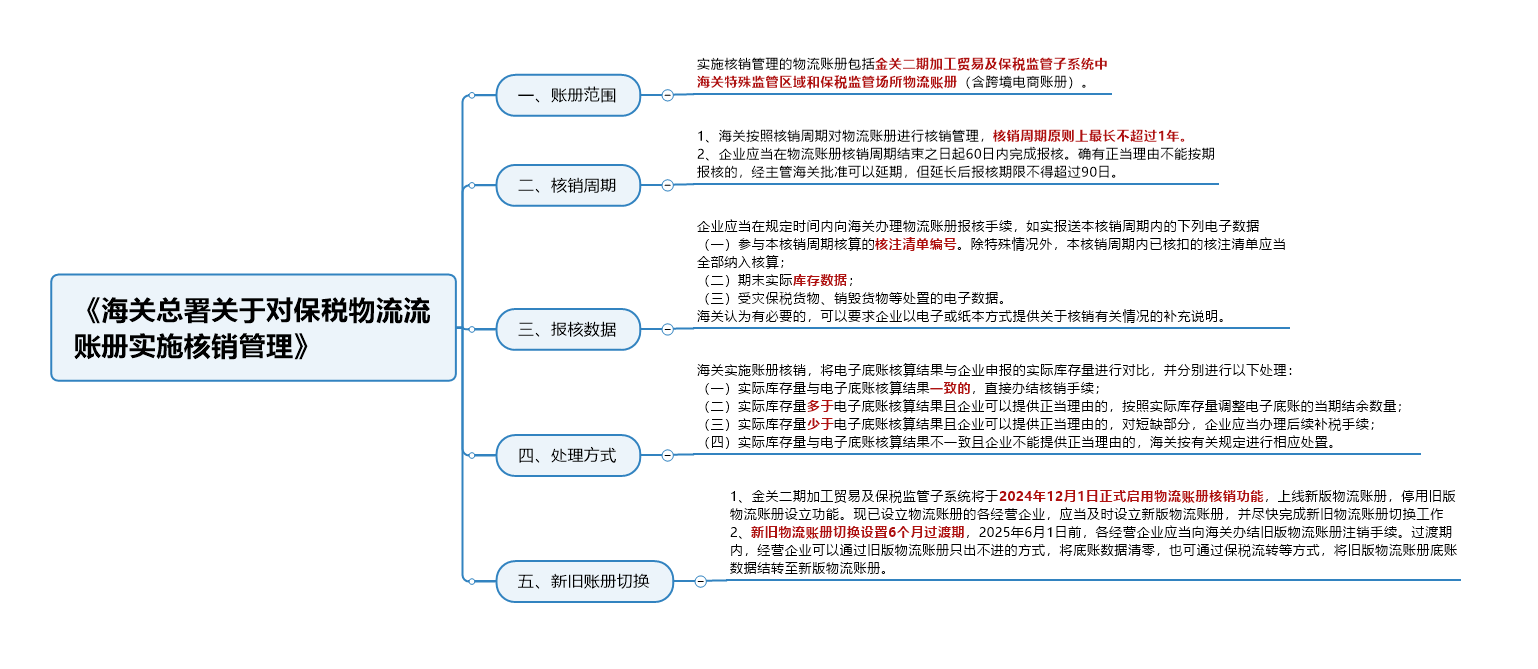
5. Notice of the General Administration of Customs on the Public Solicitation of Opinions on the Announcement of the General Administration of Customs on the Implementation of Verification Management of Bonded Logistics Accounts (Draft for Comments)
http://gdfs.customs.gov.cn/customs/302452/302329/zjz/6141897/index.html
Issuance Date: October 11, 2024
Deadline Date: October 24, 2024
In order to further standardize the management of bonded logistics account books and promote the high-quality development of bonded logistics business, the General Administration of Customs has drafted the "Announcement of the General Administration of Customs on Implementing Verification Management of Bonded Logistics Account Books (Draft for Comments)" (hereinafter referred to as the "Draft for Comments"). We are now soliciting public opinions on whether there are any issues affecting fair competition in the draft for soliciting opinions.
The general public can express their opinions through the following channels and methods:
1、Log in to the website of the General Administration of Customs (URL:) http://www.customs.gov.cn )Go to the "Home>Interactive Communication>Opinion Collection" system to submit your opinions.
2、 Email: 654573750@qq.com .
3、 Mailing address: Enterprise Management and Inspection Department of the General Administration of Customs, No. 6 Jianguomen Inner Street, Beijing, postal code: 100730. Please indicate the words "Opinions on the Implementation of Verification Management of Bonded Logistics Accounts by the General Administration of Customs (Draft for Comments)" on the surface of the envelope.
The deadline for feedback is October 24, 2024.
Drafting instructions:
1、 Drafting background
In recent years, the bonded logistics business in China has developed rapidly, and some logistics accounts are prone to discrepancies between accounts and goods due to multiple part numbers and high frequency of goods entering and leaving. Due to the lack of verification management in logistics accounting books, it is easy for the scale of differences to accumulate and it is difficult to trace the specific time when the differences occurred, which increases the compliance risk of enterprise operations and affects the high-quality development of bonded logistics business. Therefore, the General Administration of Customs has decided to issue a notice to implement verification and management of logistics accounting books after research.
2、 Main content
(1) Clearly define the scope of logistics accounting books for implementing verification management. The logistics account books for implementing verification management include the logistics account books for customs special supervision areas and bonded supervision places in the Jinguan Phase II processing trade and bonded supervision subsystem, as well as cross-border e-commerce account books.
(2) Clarify the specific regulations for the management of logistics account book verification. Clarify the management requirements for the verification cycle setting, verification deadline, verification content, and verification disposal of logistics accounting books.
(3) Clarify the specific requirements for switching between new and old logistics accounting books. Due to the need to switch between old and new logistics account books after the launch of the logistics account book verification function, a six-month transition period is set up to ensure the normal operation of the enterprises business, and the relevant requirements for the transition period are clarified.
6. Announcement of the State Council Tariff Commission on Granting Zero Tariff Treatment to 100% Taxable Products of Least Developed Countries (Tariff Commission Announcement No. 9 of 2024)
http://gss.mof.gov.cn/gzdt/zhengcefabu/202409/t20240912_3943678.html
Issuance Date: September 11, 2024
Effective Date: December 1, 2024
In order to expand unilateral opening up to the least developed countries and achieve common development, starting from December 1, 2024, a preferential tax rate of zero will be applied to 100% of tax items originating from the least developed countries that have diplomatic relations with China. Among them, tariff quota products only reduce the tariff rate within the quota to zero, while the tariff rate outside the quota remains unchanged. Please refer to the announcement link for detailed attachments.
Policy Interpretation:
On September 5th, President Xi Jinping announced in his keynote speech at the opening ceremony of the Beijing Summit of the Forum on China Africa Cooperation that China is willing to take the initiative to unilaterally expand market opening, and has decided to grant 100% tariff free treatment to all least developed countries, including 33 African countries, that have diplomatic relations with China. China will become the first developing country and major economy in the world to implement this measure, and promote Chinas large market to become a great opportunity for Africa. The Tariff Commission of the State Council has issued a notice that, starting from December 1, 2024, a preferential tax rate of zero will be applied to 100% of taxable products originating from the least developed countries that have diplomatic relations with China. Among them, tariff quota products only reduce the tariff rate within the quota to zero, while the tariff rate outside the quota remains unchanged.
According to relevant laws and regulations, the least developed countries are granted zero tariff treatment for 100% of their taxable products, without the need to go through exchange of documents with the relevant countries. Granting 100% tariff free treatment to products from the least developed countries will help promote economic and trade cooperation between China and Africa, advance the construction of a high-level China Africa community with a shared future, assist the development of the least developed countries, and achieve mutual benefit and win-win outcomes.
7. Announcement on the release of control requirements for 8 types of mercury added products, including mercury vacuum pumps, and dental amalgam
https://www.mee.gov.cn/xxgk2018/xxgk/xxgk01/202410/t20241014_1089122.html
Issuance Date: October 14, 2024
Effective Date: October 14, 2024
On June 28, 2024, the 10th meeting of the Standing Committee of the 14th National Peoples Congress deliberated and approved the Amendment to Annex A of the Minamata Convention on Mercury (hereinafter referred to as the Amendment) by Decision 4/3 of the fourth meeting of the Conference of the Parties to the Minamata Convention on Mercury. In order to implement the Amendment and further strengthen the management of mercury added products based on the full implementation of the Minamata Convention on Mercurys Entry into Force Announcement, the relevant matters are hereby announced as follows:
1、 From December 31, 2025 onwards, the production, import, and export of the following mercury added products are prohibited:
(1) Compact fluorescent lamps with integrated ballasts for general lighting purposes, not exceeding 30 watts, and a single mercury content not exceeding 5 milligrams;
(2) Cold cathode fluorescent lamps and external electrode fluorescent lamps of various lengths used for electronic displays:
1. Short length (≤ 500 millimeters), with a mercury content of no more than 3.5 milligrams per tube;
2. Medium length (>500 millimeters and ≤ 1500 millimeters), with a mercury content of no more than 5 milligrams per tube;
3. Long length (>1500 millimeters), with a mercury content of no more than 13 milligrams per tube;
(3) Strain gauges used in plethysmography;
(4) Melt pressure sensors, melt pressure transmitters, and melt pressure sensors (excluding electrical and electronic measuring instruments installed in large equipment or used for high-precision measurements where appropriate mercury free alternatives are not available);
(5) Mercury vacuum pump;
(6) Tire balancers and wheel balance weights;
(7) Photographic film and paper;
(8) Propellants for satellites and spacecraft.
2、 Prohibit the use of bulk mercury in dental treatment; It is prohibited to use dental amalgam for dental treatment of deciduous teeth, patients under 15 years old, pregnant and lactating women, unless deemed necessary by a dentist based on the patients needs.
3、 Prohibit the inclusion of mercury added products that are not allowed to be produced, imported, or exported as stipulated in the Minamata Convention on Mercury and its amendments into assembled products.
4、 Unless otherwise specified, products used for research, instrument calibration, or reference standards are not subject to the aforementioned requirements regarding prohibition of production, import, and export.
5、 Departments at all levels, including ecological environment, development and reform, industry and information technology, natural resources, housing and urban-rural development, agriculture and rural areas, commerce, health and hygiene, emergency management, customs, market supervision and management, disease prevention and control, and drug supervision and management, should strengthen supervision and management of the production and import/export of mercury added products listed in the Amendment, as well as the use of dental amalgam, in accordance with relevant national laws and regulations. Once any violation of the announcement is discovered, it shall be strictly investigated and dealt with in accordance with the law.
8. Decree No. 792 of the State Council of the Peoples Republic of China on the Export Control of Dual Use Items
https://www.gov.cn/zhengce/zhengceku/202410/content_6981400.htm
Issuance Date: September 30, 2024
Effective Date: December 1, 2024
In order to safeguard national security and interests, fulfill international obligations such as non-proliferation, and strengthen and regulate export control, the Standing Committee of the National Peoples Congress passed the Export Control Law of the Peoples Republic of China (hereinafter referred to as the Export Control Law) in 2020, laying the basic legal framework for Chinas export control. After nearly four years of implementation practice, the State Council has formulated and promulgated the "Regulations on Export Control of Dual Use Items of the Peoples Republic of China". The Regulations of the Peoples Republic of China on the Export Control of Dual Use Items have been passed at the 41st executive meeting of the State Council on September 18, 2024, and are hereby promulgated. They will come into effect on December 1, 2024. Please refer to the announcement link for detailed regulations.
Policy Interpretation:
The promulgation of the Regulation provides clearer guidance for the supervision and law enforcement of the national export control management department, and provides clearer norms for export operators to comply with the law and safeguard their rights and interests. It marks a new stage in the implementation of the Export Control Law and is of great significance. The Regulation mainly stipulates the facilitation measures for the export of dual-use items from three aspects: firstly, in terms of business qualifications, it cancels the registration system for export operators stipulated in the current administrative regulations and rules in the field of dual-use items. After the implementation of the Regulation, export operators do not need to apply for registration as dual-use item export operators in advance and can directly apply for export licenses. Secondly, in terms of transparency and standardization of export control policies, refine the considerations and procedural regulations for formulating export control policies for dual-use items. Thirdly, in terms of facilitating licensing measures, the general licensing system has been refined, and provisions have been made for its applicable conditions and procedures. At the same time, in accordance with international regulations, for exports that meet specific circumstances, such as outbound maintenance, exhibitions, and other activities, export operators can "obtain export certificates by registering and filling in information" and declare exports on their own. Fourthly, in terms of government services, it is required that the competent authorities strengthen guidance, provide good services, timely update relevant industry export control guidelines, promptly respond to inquiries from enterprises about whether export items belong to controlled items, enhance policy transparency, and improve management efficiency.




 返回新闻列表






 关注企业公众号